
HackBlue had just finished their Thanksgiving Cybersecurity Hackathon, handing out $75,000+ in prizes and having 200+ participants.
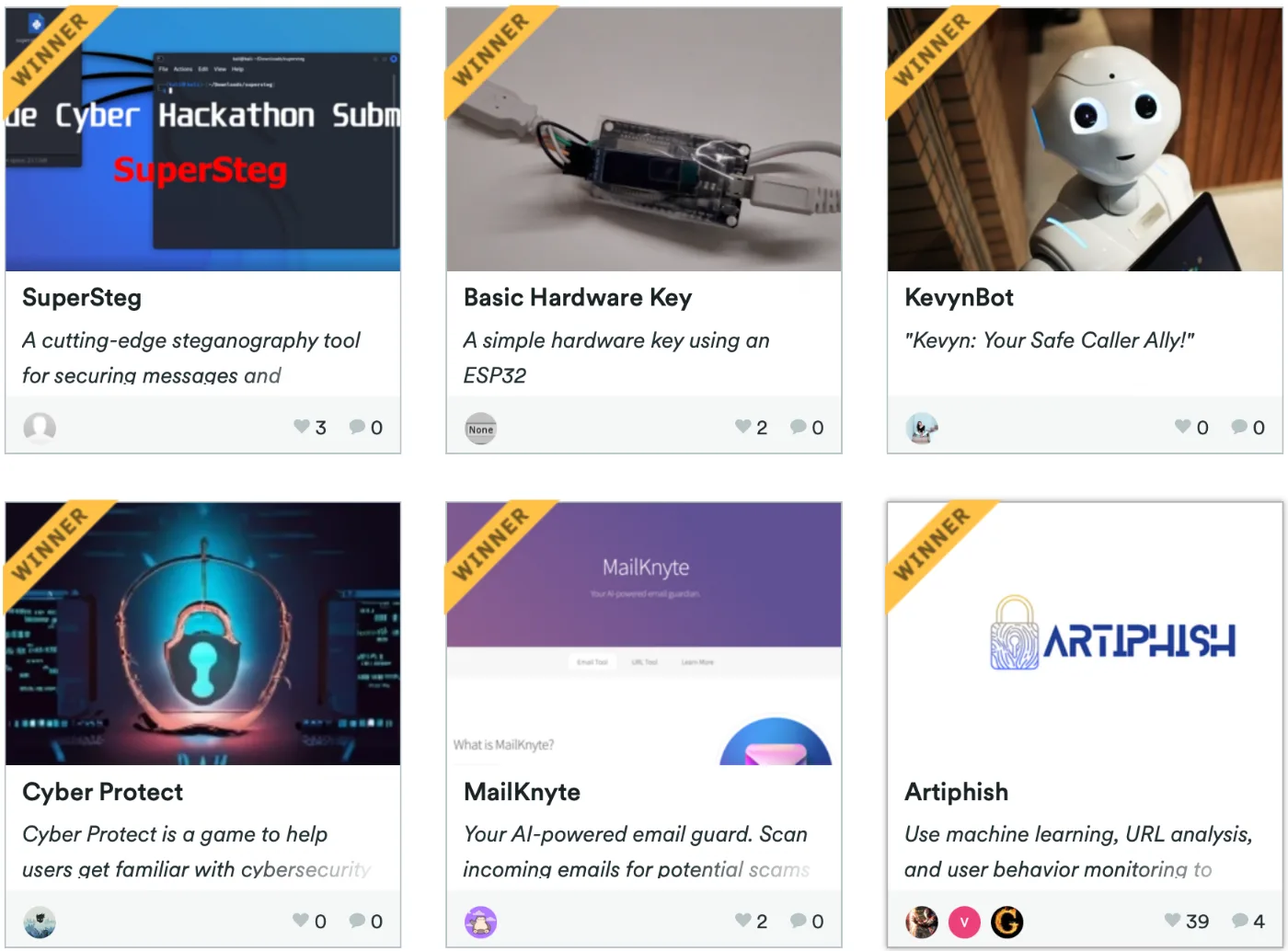
The HackBlue Cyber Hackathon was hosted from November 17th to November 27th, open to students globally. The hackathon proved to be a success with participants from over 10 countries and 205 participants. The students were prompted to build any cybersecurity-related project using their coding skills. We saw a wide variety of innovative projects and had 6 winners.
Sponsors:
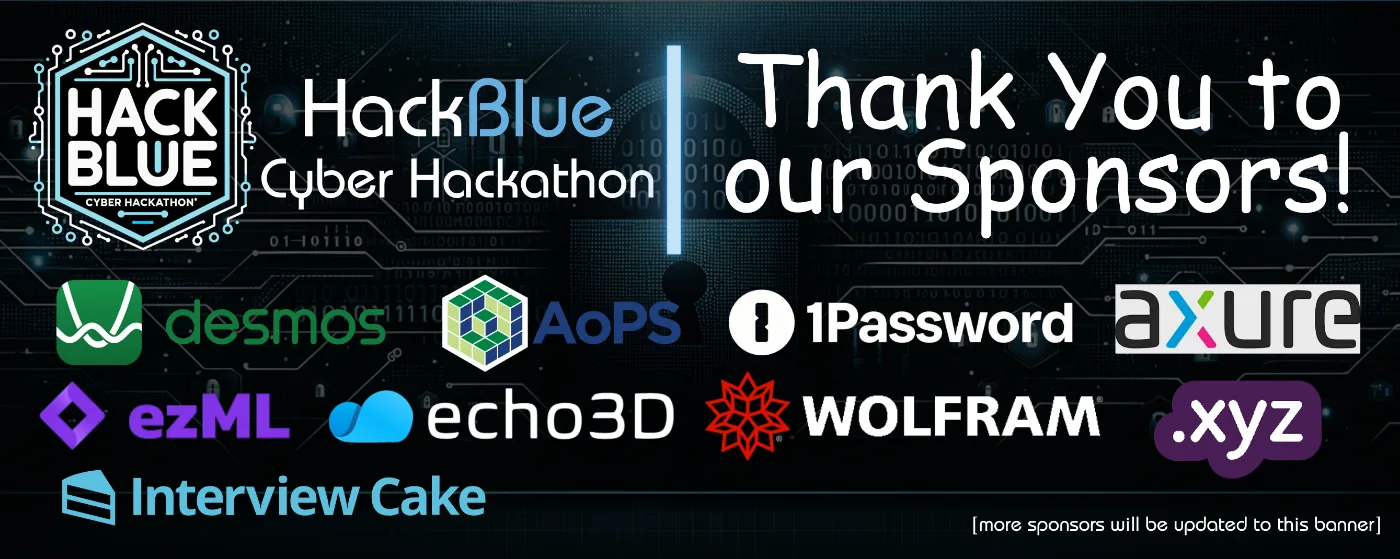
Before we go onto the details of our projects and winners, a big thank you to the sponsors for making this event possible!
More information about the prizes offered is on the Hackathon page.
Winners:
With over 200+ participants, we were extremely impressed with many of the projects, but ultimately had to choose six winners for six winning categories. The categories and their respective winners are listed: were:
- #1 Overall Winner: SuperSteg - Ayesha Nurmahemad
- #2 Overall Winner: Basic Hardware Key - Akilan Purushothaman
- #3 Overall Winner: KevynBot - Anahí Trinidad Reyes Marínez
- Best Web App: MailKnyte - Luc Nguyen
- Best Education App: Cyber Protect - Dhruv Kothari
- Most Popular: Artiphish - Pramoth KJ, Gowtham S, Vidya Sagar
Winning Project Descriptions:
SuperSteg: A cutting-edge steganography tool for securing messages and communications using a unique binary to LSB-bit methodology, that goes undetected from common analysis tools. The project was built using Python, Tkinter, Nil, and NumPy.
Basic Hardware Key: A simple hardware key using an ESP32. The key communicates with the computer through USB. The communication is used by the ESP32 board for debugging and development. Data that is encrypted by a public key stored on the computer is sent to the hardware key; the decrypted data is then sent to the computer. The key can also do authentication, by sending encrypted data, and checking if the decrypted data is the same as the original data. The "ucrypto" package was used to build this project.
KevynBot: When you receive a phone call that seems suspicious or asks you to provide personal information, you can ask Kevyn if the phone number they are calling you from is secure. Kevyn will respond if the phone number has already been reported, and will tell you the date of the report and the reason, as well as provide you with instructions on how to report the phone number if necessary. In the event that the number consulted has not been previously reported Kevyn will offer recommendations to protect her personal information. This project was built using DialogFlow, MetaForDevelopers, Ngrok, and node.js.
MailKnyte: Your AI-powered email guard. Scan incoming emails for potential scams with personalized risk assessments. A reliable friend in your inbox, making your digital communication safer and worry-free. The front-end was built using HTML5 and CSS, with styling provided by the HTML5Up Stellar template. For the backend, Node.js and Express were used to create a server to handle requests.
Cyber Protect: Cyber Protect is a game to help users get familiar with cybersecurity and have fun. Users will learn IoT concepts, cybersecurity terms, and many other types of attacks. The game was built primarily using AWT, Java, Python.
Artiphish: This project uses machine learning, URL analysis, and user behavior monitoring to detect phishing sites. Scan URLs for suspicious patterns, cross-check with blacklists, and educate users to enhance online security. The project was built using HTML5, CSS3, Javascript, machine learning.
Conclusion:
If you are a high school, collegiate, or self-learning student interested in cybersecurity, make sure not to miss future competitions and events in the future from HackBlue.